
Now You See Me: Now You Don’t (2025)
Third time’s the charm, they say. Except when it isn’t.
Director Ruben Fleischer’s contribution to the Now You See Me franchise faces an unenviable task: how do you keep pulling rabbits from a hat when everyone’s already seen the bottom panel? The answer, it turns out, is that you don’t really try. You just produce another rabbit, acknowledge that we’ve all been here before, and hope the rabbit’s cute enough to justify the ticket price.
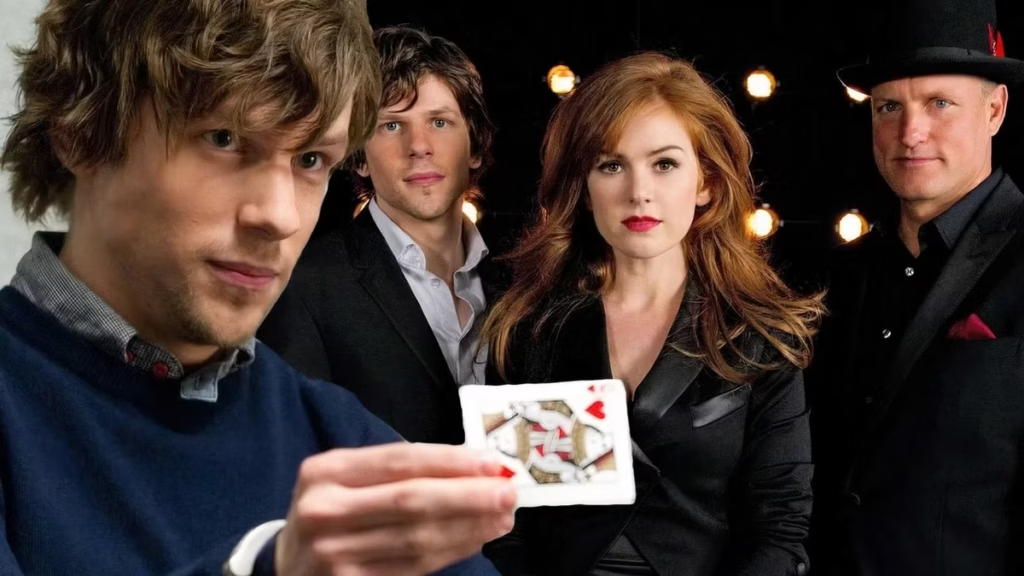
The Four Horsemen return—Jesse Eisenberg’s J. Daniel Atlas, Woody Harrelson’s Merritt McKinney, Dave Franco’s Jack Wilder, and Isla Fisher’s Henley Reeves—this time joined by three younger illusionists (Justice Smith, Dominic Sessa, Ariana Greenblatt). Their target? Veronika Vanderberg, a diamond heiress played with delicious villainy by Rosamund Pike, whose fortune conceals links to arms dealers, human traffickers, and the sort of people you wouldn’t invite to dinner. The intergenerational team must expose Vanderberg’s empire through an elaborate, globe-trotting magical heist. Different methods, same goal: making bad people disappear. Metaphorically speaking.
What works best is something the film itself might not have fully intended. There’s a peculiar relevance to watching magicians expose corruption through carefully orchestrated lies. We live in a world where appearance trumps reality more often than we’d like to admit, where wealth can purchase not just influence but the veneer of respectability. The Horsemen’s mission—deceive to reveal deception, manipulate to expose manipulation—creates an interesting knot. One wonders if the irony is deliberate or accidental. Probably both.
Pike steals every scene she inhabits. Her Vanderberg understands that villainy, done properly, is performance art. She doesn’t just wield power; she stages it, understanding that in modern systems, looking legitimate often matters more than being legitimate. It’s a knowing performance that never winks at the camera but somehow acknowledges the absurdity without undercutting it.
The problem—and it’s not insignificant—is the overcrowding. Nine active participants strain the film’s ability to breathe. The original quartet’s chemistry, which gave earlier instalments their emotional weight, gets diluted across too many competing personalities. The newer illusionists feel more like placeholders than people. We learn their skills but not their souls, if that doesn’t sound too melodramatic. It probably does.
Fleischer opts for realism over fantasy, prioritising plausible illusions over the franchise’s previous taste for the impossible. This grounds the story but also drains some of its audacity. The series built its reputation on spectacular improbability; stripping that away leaves something functional but less distinctive. A Museum of Illusions sequence exemplifies the misplaced priorities: visually sumptuous, narratively inert. All that money spent on sets when a sharper script might have served better.
Five credited writers produced the screenplay, which explains both its coherence and its occasional flatness. The plot hangs together despite considerable complexity—no small feat—but dialogue sometimes defaults to explaining rather than revealing. Characters announce their motivations like they’re reading from instruction manuals.
Does it entertain? Certainly. Does it transcend the franchise’s established boundaries? Not particularly. I’d argue the series has reached that awkward middle age where it knows exactly what it is but hasn’t decided whether that’s enough. For fans seeking familiar pleasures, this delivers. For those hoping the franchise might surprise them, the 112 minutes may feel longer than they should.
It’s competent. Sometimes competent is sufficient. Sometimes it isn’t.