
The End of Oak Street (2026)
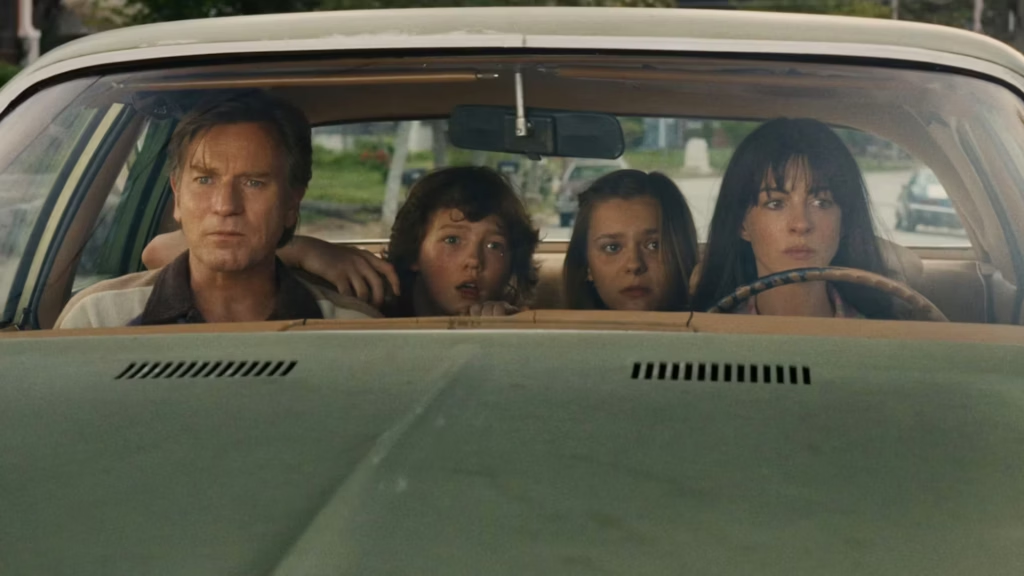
The End of Oak Street lands in that peculiar sweet spot where nostalgia does most of the heavy lifting, and for long stretches it works, because David Robert Mitchell knows exactly which levers he’s pulling. He made It Follows a decade back. That film understood dread better than most horror directors twice his age, patient with silence when other films would panic and cut. Here, he’s swapped suburban menace for suburban wonder, or something close to it. The premise: one morning the Platt family, Denise (Anne Hathaway) and Greg (Ewan McGregor), wake to find their entire cul-de-sac has been wrenched out of a Detroit suburb, 1982, and dropped somewhere it very much doesn’t belong, somewhere with teeth. Their kids, Brian and Audrey, work out what every ’80s kid protagonist eventually works out: the adults don’t have this handled either.
What struck me first, sitting there in the dark, was how confidently the film commits to its own silliness: there’s no hand-wringing explanation, no third act info-dump justifying the physics of a suburb getting yanked through time. It just happens, and the film dares you to keep up rather than catch you. I found that refreshing, more than I expected to. Too many blockbusters now apologise for their premise before they’ve earned the right to. This one doesn’t bother.
Hathaway carries most of the emotional weight, and she’s good at it, better than the script probably deserves; there’s a scene mid-film, quiet, almost throwaway, where she’s calculating supplies while her voice cracks just slightly, and it’s the most human beat in the whole picture. McGregor gets less to chew on. Michael Giacchino’s score does what Giacchino scores do, swelling exactly when you’d predict, though I’ll admit it worked on me anyway during the third act, against my better judgement.
Where the film loses altitude is pacing. The middle stretch sags under the weight of its own set pieces, one chase blurring into the next without the character beats to justify the repetition. Mitchell loves Spielberg; it shows in nearly every frame, but Spielberg knew when to let a scene breathe between spectacles. This film forgets to breathe more than once. And the ending, without giving anything away, resolves a little too neatly for a story that spent ninety minutes insisting the world had gone genuinely strange.
Still. I left the cinema smiling more than frowning, which counts for something. The End of Oak Street isn’t the film critics thirty years from now will point to as a genre landmark, but it’s an honest, well-crafted piece of popcorn cinema with a couple of scenes that land emotionally amid the chaos. Worth the ticket price, particularly on a big screen where the set pieces get room to work. Just don’t expect it to sit with you the way Jurassic Park still does, decades later.