
The Odyssey (2026)
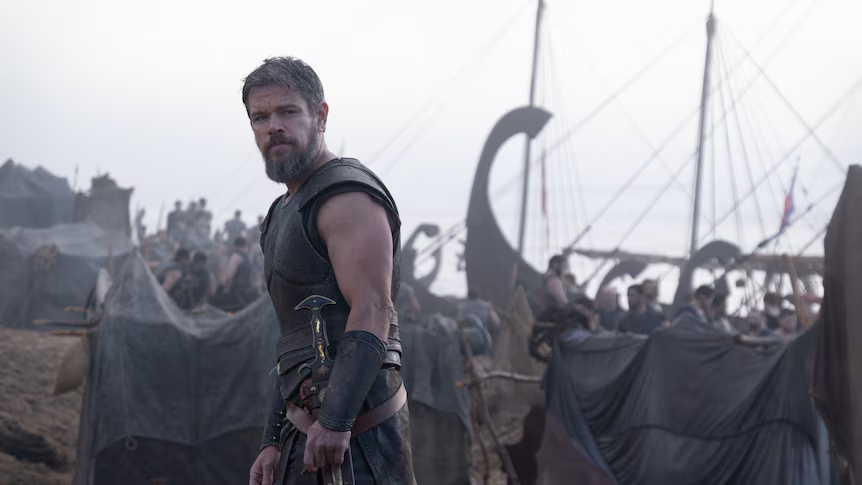
Nolan pulls this one off, mostly, and that alone deserves a moment of applause given how many directors have tried and abandoned Homer over the decades. Early in the film, a storyteller climbs onto a banquet table mid-tale and the room goes still around him. The whole film is really about the telling of stories: how they comfort us, mislead us, wound us and occasionally stitch us back together, all within the space of a breath. A director this fond of folding time in on itself was always going to end up here, at the oldest folded story there is.
The plot, for anyone who slept through Year 9 English, follows Odysseus (Matt Damon), King of Ithaca, as he tries to get home from Troy and is thwarted at every turn by gods with old scores to settle and monsters with poor table manners. Back on Ithaca, his wife Penelope (Anne Hathaway) and son Telemachus (Tom Holland) are fending off a house full of suitors who have overstayed their welcome by roughly a decade. Robert Pattinson, Zendaya, Lupita Nyong’o and Charlize Theron fill out a cast large enough to need its own shipping manifest.
Visually, the film is a treat, and I say that as someone generally suspicious of directors who insist their movie must be seen in the biggest format known to cinema. Shot entirely on IMAX stock, with a clear preference for practical effects over anything built in a computer, the film has a physical heft that digital work rarely manages. Hoyte van Hoytema’s camera treats the sea as something that might genuinely kill you rather than as scenery for a hero shot. Ludwig Göransson’s score, mercifully, does not sound like every other Nolan score of the past fifteen years, though it comes close in one or two spots.
What impressed me most is the way the gods are handled. Their meddling plays out with an almost office-memo coldness, favours granted and withdrawn on a whim, suggesting how little control any of us hold over the forces running our lives. Damon plays Odysseus as a tired, calculating man, uncertain whether his own cleverness is a gift or a slow-acting poison. Those quieter scenes turn out to be where the film is strongest, ahead of any of the set pieces.
The spectacle itself holds up well. One encounter with a certain one-eyed gentleman is genuinely unsettling, and worth the ticket price on its own. But across a near three-hour running time, that accumulation of storm, monster and island starts to resemble a very well-dressed checklist being worked through. Homer wrote it episodically. Nolan, usually the tightest structural mind working in blockbusters, lets that looseness creep in instead of reining it back.
Even so, this is a serious and handsome swing at a story that has resisted a big, straight, effects-driven Hollywood treatment for decades, and arrives less than two years after Ralph Fiennes took a smaller, quieter run at the same material in The Return. It stumbles across a few of its own set pieces along the way. But for most of its running time, The Odyssey earns the comparison to the tale it is drawn from, one that has outlasted three thousand years of retelling for good reason. Recommended, and if you can catch it on the largest screen within reach, do.