
Toy Story 5
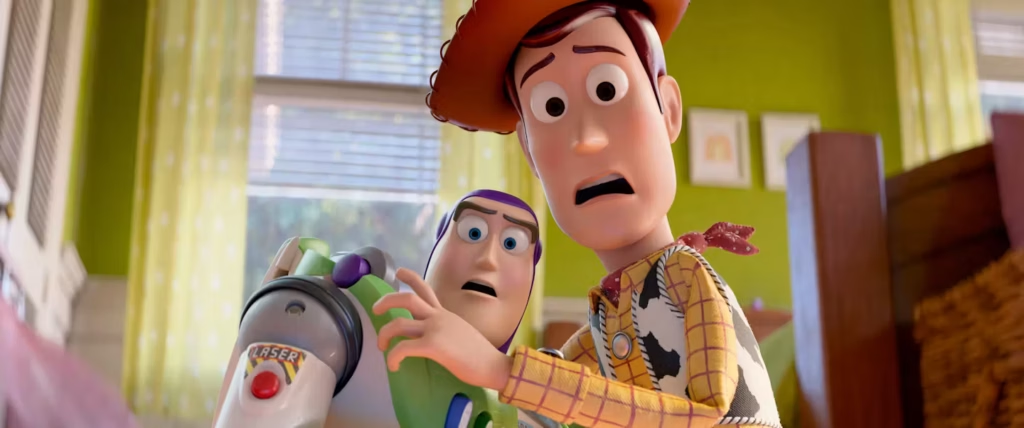
Toy Story 5 turns out to be a good deal better than its existence suggested. After the graceful farewells offered by both Toy Story 3 and Toy Story 4, another sequel seemed, frankly, unnecessary. I approached it with a degree of caution, perhaps even suspicion. Yet Pixar has managed, once again, to find fresh emotional ground among the familiar plastic faces. The cupboard is not bare just yet.
Andrew Stanton, working with co-director Kenna Harris, returns these much-loved characters to a world that has shifted beneath their tiny feet. Bonnie is older now, less interested in traditional toys and increasingly absorbed by a sophisticated tablet-like device named Lilypad. Woody, Buzz, Jessie and the rest soon realise that they are no longer competing with other toys, but with a piece of technology capable of holding a child’s attention indefinitely. It is a daunting rival. Even adults occasionally struggle to put their screens down, and we are at least allowed coffee.
The film’s central idea proves surprisingly poignant. The Toy Story series has long been preoccupied with abandonment and obsolescence, yet this instalment broadens those concerns by asking what happens when childhood itself changes shape. The screenplay treats technology neither as villain nor saviour. Instead, it presents screens as one more force competing for a child’s imagination, leaving the audience to decide what may be gained or lost.
Jessie emerges as the emotional anchor, and Joan Cusack brings her customary warmth and energy to the role. Woody and Buzz remain important presences, although longtime admirers may feel a twinge of disappointment that their relationship occupies less of the dramatic centre. Their reduced prominence gives Jessie room to step forward, though some of the series’ most distinctive chemistry inevitably recedes with them.
Greta Lee voices Lilypad with just the right blend of confidence and sincerity. What makes the character interesting is not conventional villainy. Lilypad genuinely believes she is helping Bonnie, and that conviction creates some of the film’s strongest dramatic moments because the toys are forced to confront an opponent acting from care rather than malice.
The animation is superb, rendering plastic, fabric and metal with astonishing tactile detail. There are moments when I half expected to hear the faint crackle of Velcro. A sequence involving a large number of confused Buzz Lightyear figures ranks among the film’s funniest passages while carrying an unexpectedly philosophical edge. Identity crises, it seems, are not confined to university undergraduates.
The film is not without shortcomings. Some emotional beats echo earlier instalments a little too closely, and there are occasions when the narrative works rather hard to manufacture urgency. A subplot concerning Bonnie’s social struggles carries genuine emotional weight, yet it feels underdeveloped, as though an extra ten minutes might have allowed it to breathe.
Toy Story 5 does not reach the heights of the series at its finest. In my opinion, few viewers will place it alongside Toy Story 2 or Toy Story 3. Still, it offers something worthwhile: a thoughtful reunion with characters who continue to reflect changing ideas about childhood, friendship and belonging. For a fifth instalment released more than three decades after the original, that is no small achievement.